Harnessing the Power of Heated Humidified Oxygen – Respiratory Therapy Without Compromise
- Published on:
Harnessing the Power of Heated Humidified Oxygen – Respiratory Therapy Without Compromise
- Published on:

On this page
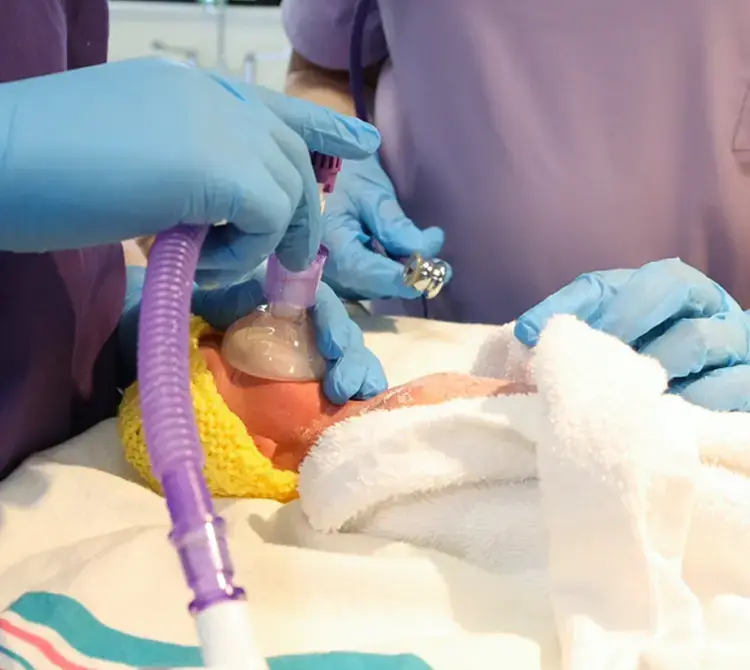
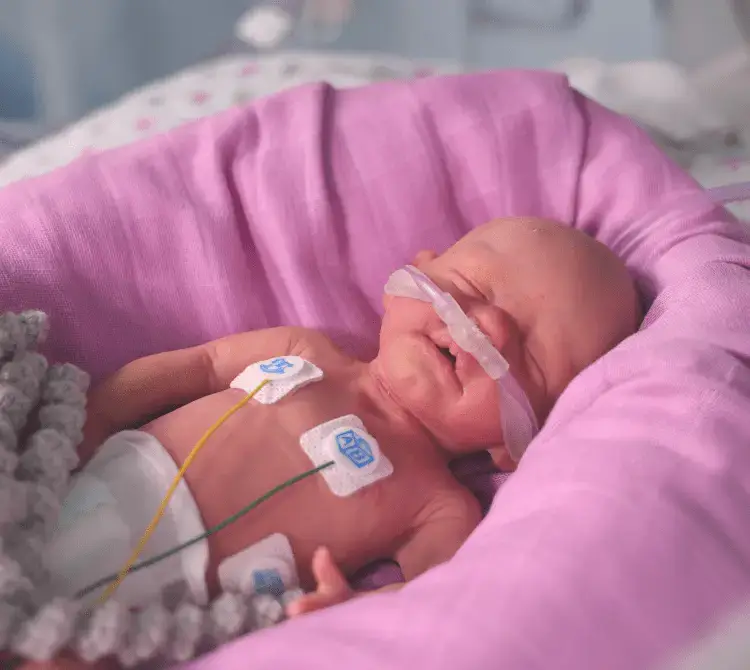
You want the best treatment for your patient using the optimal therapy with the maximum comfort. It has been recognised for some time that inadequate gas conditioning during non-invasive ventilation (NIV) can impair the anatomy and function of nasal mucosa, leading to injury [1]. The warmth and humidity of oxygen-enriched air is preferable to traditional delivery of cold dry oxygen as it is more comfortable for the patient and leads to better treatment compliance and mucociliary clearance.[2] Adding adequate warmth and high humidification to the breathing gas also allows higher flow rates to be applied.
High Flow Oxygen therapy as a treatment for mild to moderate hypoxemic respiratory failure
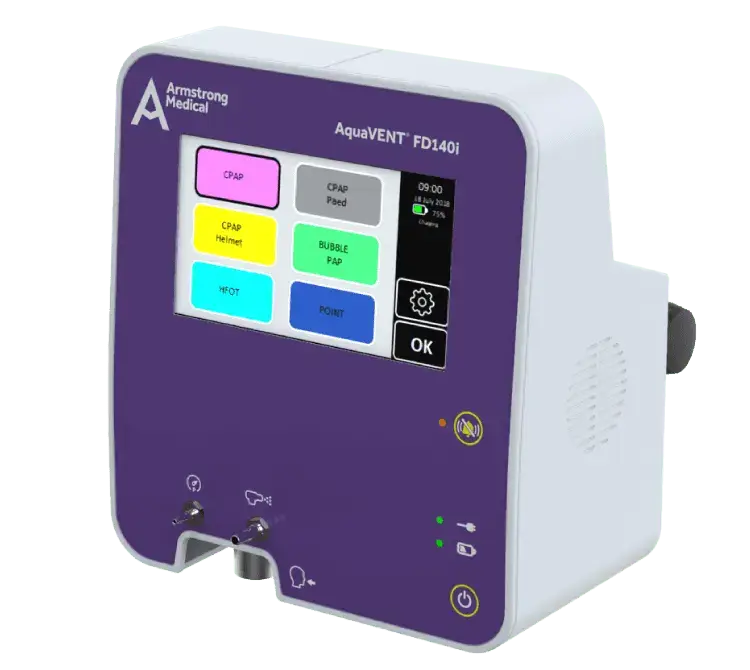
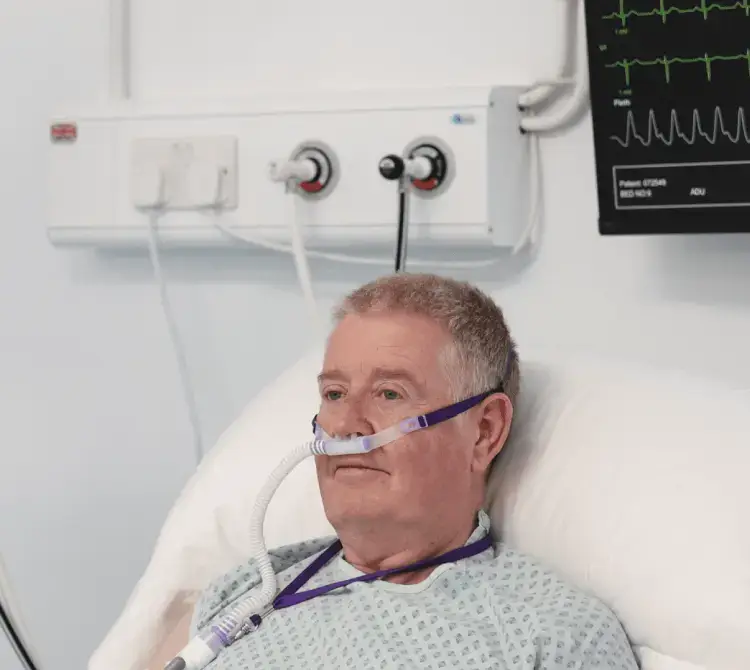
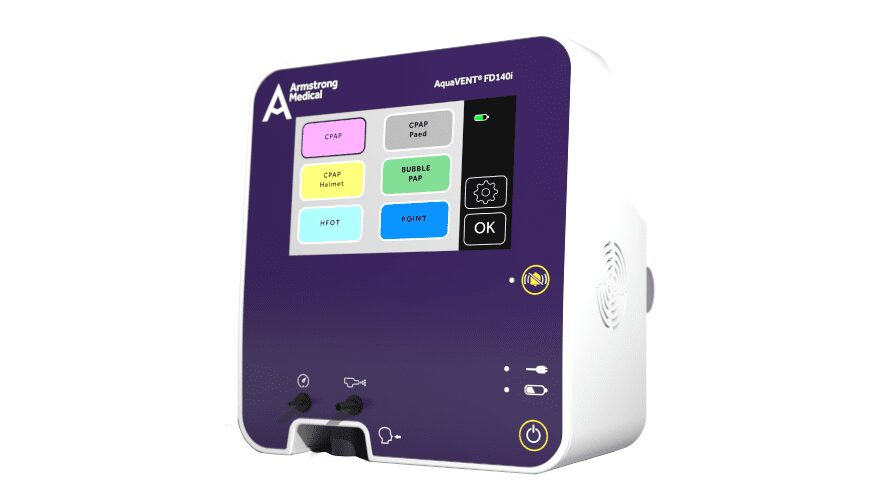
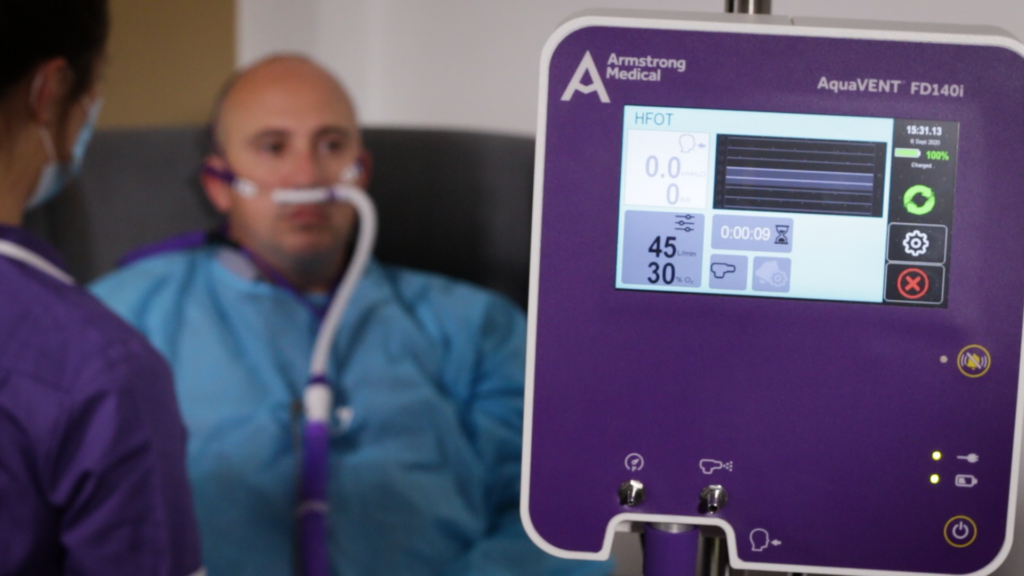
AquaVENT® FD140i functions as a High Flow Oxygen Therapy (HFOT) device for the non-invasive management of hypoxemic respiratory failure where patients require oxygen at higher flow rates, up to 80L/min with FiO2 of 21-100%. The treatment is conditionally recommended both by the European Respiratory Society and the American Association for Respiratory Care for patients at higher risk of intubation and as protection against re-intubation. Optimising oxygenation at higher flow rates facilitates alveolar recruitment and reduces CO2 by washing it out of the dead space. This is delivered via soft large bore nasal prongs which promotes prolonged expiration through resistance, thereby lowering the respiratory rate and work of breathing whilst ensuring patient comfort and compliance [3].
Maintaining oxygen saturation, the difference between Flow rate and PEEP
High-flow nasal cannula (HFNC) therapy provides a modest amount of positive end-expiratory pressure (PEEP)—generally ~1 cm for every 10 L/min of flow—but increasing the flow rate too high (e.g., >80 L/min) can lead to patient discomfort, increased expiratory resistance, and inadequate PEEP if the mouth is open. When describing PEEP in their 2016 guidelines, the British Thoracic Society highlight that this area of physiology can cause confusion among healthcare professionals and the optimal method for setting it remains debated. They explain, “PEEP helps shift the lungs to a more compliant part of the pressure-volume curve, meaning the lungs require less pressure to expand, making breathing more efficient”. [4]
If the patient continues to experience high work of breathing, persistent hypoxemia, or lung collapse (atelectasis) despite high flow settings, it indicates a need for more sustained, higher-level PEEP, usually provided by non-invasive ventilation (NIV) or CPAP.[5]
CPAP – the single level positive airway pressure
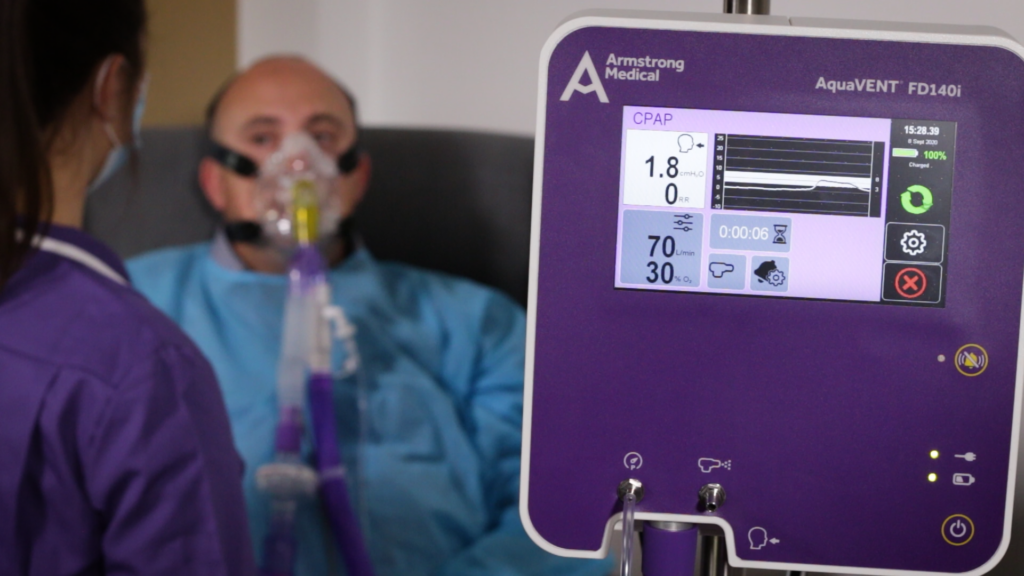
Continuous Positive Airway Pressure (CPAP) with heated humidified gas, provides a single, continuous level of distending pressure to the patient’s lungs. CPAP therapy via the AquaVENT® FD140i is intended for patients in whom single level positive airway pressure is clinically indicated, such as those requiring maintenance of functional residual capacity or support for conditions where continuous distending pressure is beneficial [6]. The use of a properly fitted mask to avoid pressure injury and aid patient comfort and compliance is crucial to therapy success [7].
Key Takeaways
Warm and humid oxygen enriched air is the optimal choice for patients who require high flow nasal cannula therapy.
High flow nasal cannula therapy is conditionally recommended treatment by both the European Respiratory Society and the American Association for Respiratory Care.
High flow nasal cannula therapy provides a modest amount of PEEP, if the patient requires a higher level, then CPAP is the preferred therapy.
CPAP provides a single continuous level of distended pressure for maintenance of functional residual capacity or support for conditions that benefit from continuous distending pressure for alveolar stability e.g. acute cardiogenic pulmonary oedema.
Properly fitted masks reduce the risk of facial injury, promote patient comfort and encourage compliance with therapy.

Janine Thomas
Clinical Product Lead RN
Janine works closely with the commercial team to bridge clinical insight and healthcare innovation. With over 32 years of experience as a registered nurse across Emergency Medicine, Surgery, High Dependency Units, and digital healthcare, she brings a deep understanding of both the patient journey and the realities of frontline clinical care.
Passionate about improving outcomes, Janine champions the adoption of best-in-class therapies and believes that patient wellbeing should remain at the heart of every healthcare decision.
References
[1] Re, R.;Lassola, S.; De Rosa, S.; Bellani, G. Humidification during Invasive and Non-Invasive Ventilation: A Starting Tool Kit for Correct Setting. Med. Sci. 2024, 12, 26. https://doi.org/10.3390/medsci12020026 Petkar S, Wanjari D, Priya V.A Comprehensive Review on High-Flow Nasal Cannula Oxygen Therapy in Critical Care: Evidence-Based Insights and Future Directions. Cureus. 2024 Aug 6;16(8):e66264. https://doi.org/10.7759/cureus.66264. PMID: 39238720; PMCID: PMC11375959
[2] Zerman, A. (2023). Humidification and High-Flow Oxygen Therapy in Critically Ill Patients: Devices and Humidification Technology and Clinical Implications. In:Esquinas, A.M. (eds) Humidification in the Intensive Care Unit. Springer, Cham.https://doi.org/10.1007/978-3-031-23953-3_5
[3] Davidson, A.C. (2016). BTS/ICS guideline for the ventilatory management of acute hypercapnic respiratory failure in adults. Thorax, 71(Suppl2), pp.ii1–ii35. https://doi.org/10.1136/thoraxjnl-2015-208209
[4] Li, J.,Albuainain, F.A., Tan, W. et al. The effects of flow settings during high-flow nasal cannula support for adult subjects: a systematic review. Crit Care 27, 78 (2023). https://doi.org/10.1186/s13054-023-04361-5
[5] High-flow therapy: physiological effects and clinical applications Rebecca F.D’Cruz NicholasHart Georgios Kaltsakas Breathe 2021 16(4): 200224; DOI: https://doi.org/10.1183/20734735.0224-2020
[6] Kelly, J., Dowe, M., Briggs, J., Chan, M., & Martin-Lazaro, J. (2020). Dual High Flow Oxygen Therapy and CPAP Ventilation in a Single Device for COVID-19. British Journal of Healthcare and Medical Research, 7(6), 06–12.https://doi.org/10.14738/bjhmr.76.9324
[7] Alqahtani JS, AlAhmari MD. Evidence based synthesis for prevention of noninvasive ventilation related facial pressure ulcers. Saudi Med J. 2018 May;39(5):443-452. doi: 10.15537/smj.2018.5.22058. PMID: 29738002; PMCID: PMC6118171.