Does Interface Choice Influence the Trigeminocardiac Reflex?
- Published on:
Does Interface Choice Influence the Trigeminocardiac Reflex?
- Published on:
On this page
While Continuous Positive Airway Pressure (CPAP) and Positive End-Expiratory Pressure (PEEP) are well-established interventions, there remains ongoing discussion about whether the choice of interface influences the likelihood of triggering the trigeminocardiac reflex. Current European Consensus Guidelines [1] recommend the early use of CPAP with PEEP in spontaneously breathing preterm infants. However, less attention has been given to whether the interface used to deliver this support may itself influence the infant’s physiological response.
What is the trigeminocardiac reflex?
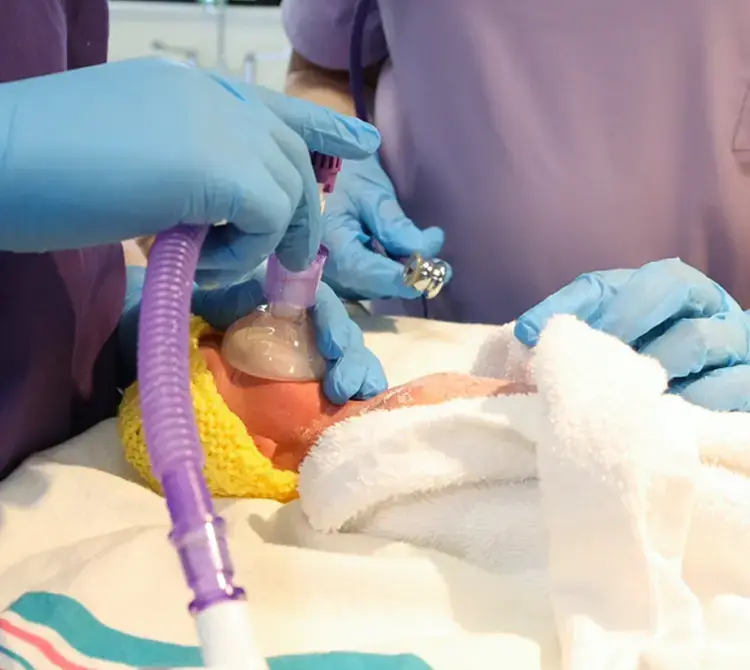
The trigeminocardiac reflex may be triggered when pressure is applied through a facemask to create an effective seal and minimise leaks. Activation of the trigeminal nerve can result in apnoea and bradycardia, both undesirable events in the first few minutes of life for an already vulnerable infant. Several studies have explored whether changing the interface could reduce these reflex responses. One of the most significant findings came from Kuypers et al. [2], who measured the force clinicians applied during facemask ventilation. Higher forces exerted through the facemask were associated with an increase in apnoea and bradycardia. Infants receiving positive pressure ventilation required significantly greater applied force than those receiving facemask CPAP/PEEP, with higher forces significantly increasing the incidence of apnoea and bradycardia (p< 0.001). These findings suggest that not only does the interface matter, but so does the way it is applied.
Is nasal CPAP the answer?
Several studies have compared traditional facemasks with nasal CPAP delivered via nasal masks or binasal prongs. One study found there was no significant difference between the groups, with 71% of the facemask group experiencing apnoea compared with 66% in the binasal prong group (p=0.7) [3]. The authors concluded that apnoea and bradycardia occurred frequently after applying either a facemask or nasal prongs to preterm infants at birth. This highlights an important point. Simply changing the interface does not appear to eliminate the trigeminocardiac reflex. Instead, the evidence suggests that both interfaces can stimulate the trigeminal nerve. However, nasal CPAP may still offer practical advantages by reducing air leaks and helping to maintain more consistent PEEP throughout respiratory support.
So, does the interface really matter?
The evidence shows that extremely preterm infants had higher rates of apnoea and bradycardia in both facemask and nasal CPAP groups. This suggests that gestational age and respiratory immaturity remain major contributors to respiratory instability immediately after birth.
At the same time, the evidence indicates that caregiver technique is equally important.
Although it is documented that less pressure is exerted through nasal CPAP circuits than a facemask, studies did not demonstrate a significant difference in the incidence of trigeminocardiac reflex between the groups. There was a greater increase in apnoea when higher levels of force were used by the caregiver to hold the facemask on the infant’s face, with some infants subsequently requiring intubation.
An important clinical question therefore remains:
“Which came first – the apnoea caused by the trigeminocardiac reflex being triggered, or the apnoea caused by the infant’s extreme prematurity?”
Further research will be needed to fully answer this question.
Key Clinical Takeaways
Facemask PEEP remains the initial choice during neonatal stabilisation because it is readily available and allows clinicians to escalate quickly to positive pressure ventilation if required. However, caregivers should be vigilant about the amount of pressure exerted through the facemask, as excessive force may increase the risk of triggering the trigeminocardiac reflex, resulting in apnoea and bradycardia.
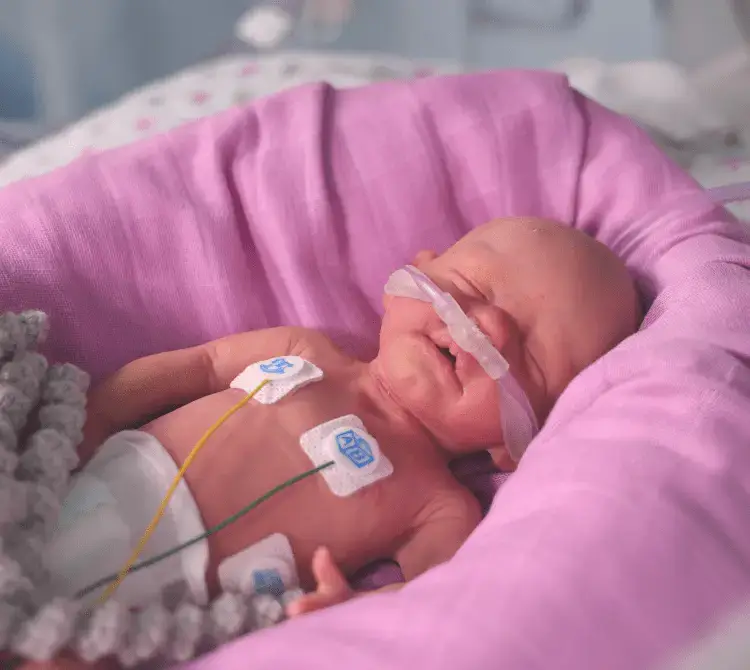
Although nasal CPAP delivered via a nasal mask or binasal prongs can still trigger the trigeminocardiac reflex, these systems are secured using hats and straps rather than continuous manual pressure. This reduces caregiver-applied force while also providing a more consistent seal. Evidence also suggests that nasal masks are associated with less nasal trauma than binasal prongs, making them an attractive option where clinically appropriate.
Ultimately, current evidence suggests that the interface itself is only one part of the equation. Careful application, gentle handling and selecting the most appropriate interface for the clinical situation remain key to optimising respiratory support for preterm infants in the delivery room.

Lauren Teanby
Lauren Teanby qualified as a paediatric nurse in 2008 and spent 13 years working in a Level 2 NICU, before progressing to a Sister post and completing the Enhanced Neonatal Nurse Practitioner (ENNP) course. In the summer of 2021, Lauren transitioned to a Level 3 NICU to pursue her ANNP Masters.
She is currently an Advanced Neonatal Nurse Practitioner at the Jessop Wing in Sheffield, enjoying the dynamic nature of the role—working across the NICU, postnatal wards, and attending deliveries. Lauren is passionate about providing high-quality neonatal care and supporting both babies and their families during critical moments.
References
[1] European Consensus Guidelines on the Management of Respiratory Distress Syndrome: 2022 Update. (2022). Sweet, DG. Carnielli, VP. Greisen, G. Hallman, M. Klebermass-Schrehof, K. Ozek, E. Te Pas, A. Plavka, R. Roehr, CC. Saugstad, OD. Simeoni, U. Speer, CP. Vento, M. Visser, GHA. Halliday, HL. Cited: https://pubmed.ncbi.nlm.nih.gov/30974433/.
[2] Kuypers, KLAM. Cramer, SJE. Dekker, J. Visser, R. Hooper, SB. Te Pas, AB. (2024). Exerted force on the face mask in preterm infants at birth is associated with apnoea and bradycardia.
[3] Kuypers, KLAM. Lamberska, T. Martherus, T. Dekker, J. Böhringer, S. Hooper, SB. Plavka, R. B. te Pas, A. (2020). Comparing the effect of two different interfaces on breathing of preterm infants at birth: A matched-pairs analysis.