AMSORB® Plus: Beyond Safety – Driving Clinical and Economic Value
- Published on:
AMSORB® Plus: Beyond Safety – Driving Clinical and Economic Value
- Published on:

On this page
Epidemiology
- Each year, over 300 million surgical procedures are performed globally, the majority involving general anaesthesia.
- In many health systems, low-flow anaesthesia (<2 L/min) is increasingly promoted to reduce volatile agent consumption and environmental impact.
- ICU patients requiring mechanical ventilation may remain ventilated for days or weeks, increasing cumulative exposure to absorbent-related risks and costs.
Given the scale of exposure, small differences in absorbent performance—duration, predictability, and safety under low-flow conditions—can have disproportionate economic consequences at institutional level.
Moving Beyond Unit Price: Total Cost of Use
- CO₂ absorbent consumption.
- Sevoflurane usage.
- Waste-disposal costs.
Key Economic Mechanisms Driving Cost Savings
1. Reduced Absorbent Consumption and Staff Time
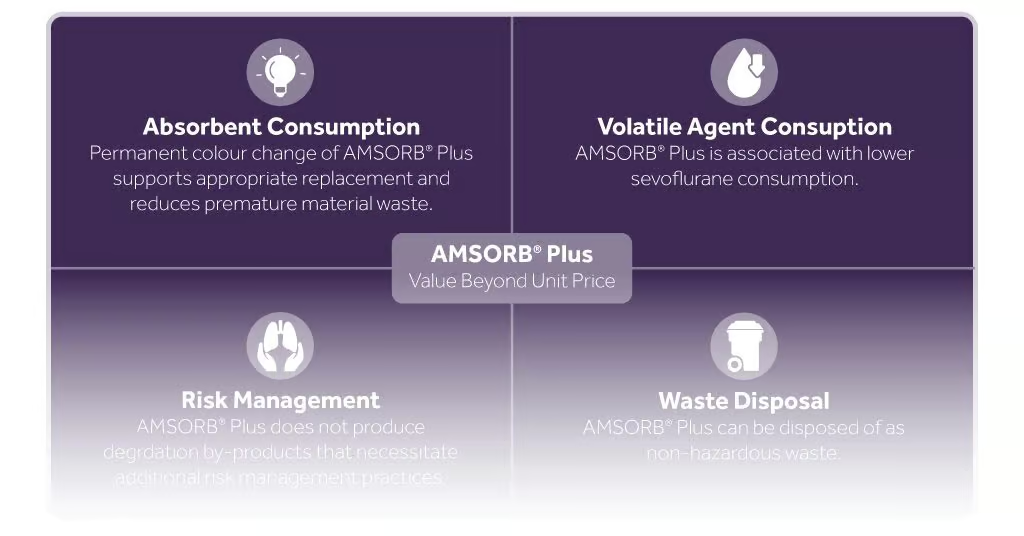
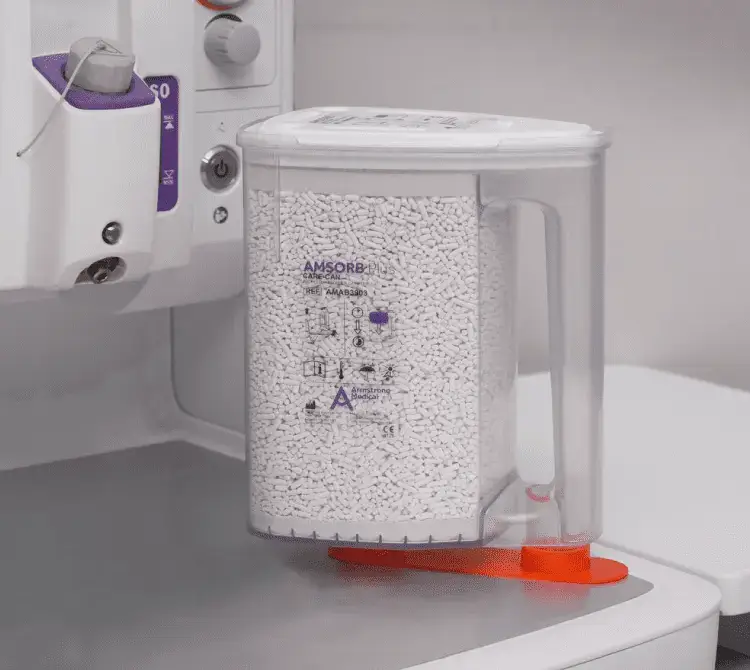
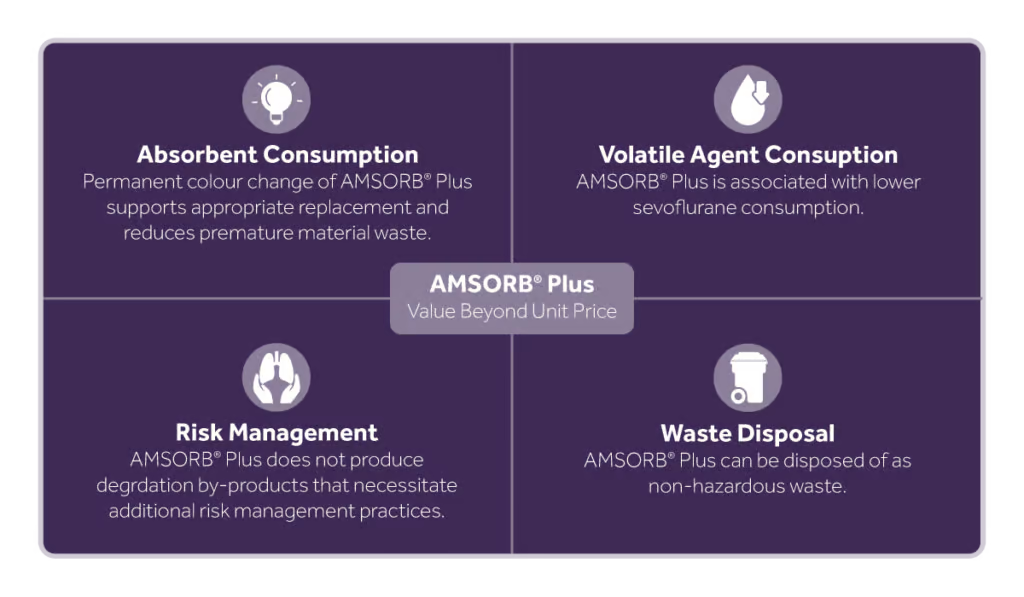
AMSORB® Plus exhibits a reliable, permanent colour change at exhaustion.[2] In contrast, soda lime is often replaced on fixed schedules to mitigate uncertainty, leading to premature disposal.
From an economic perspective, this results in:
- Higher material consumption.
- Increased staff time for unnecessary changeovers.
- Avoidable waste generation.
By enabling replacement only when clinically required, AMSORB® Plus reduces both direct product costs and indirect labour costs.
2. Lower Volatile Anaesthetic Consumption
Volatile agents represent a significant and recurring cost driver in anaesthesia. In the comparative study, sevoflurane consumption was lower during periods when AMSORB® Plus was used, despite similar patient volumes.
Although fresh-gas flows were not formally measured, 70% of anaesthetists reported changes in practice, suggesting greater confidence in sustained low-flow techniques. From a health economics perspective, this is important because:
- Volatile agent costs scale directly with flow rates.
- Savings accrue continuously across high procedure volumes.
- Behavioural confidence, rather than enforced protocols, drove the change.
3. Risk Avoidance as an Economic Benefit
Traditional soda lime contains strong alkalis that can degrade volatile anaesthetics under low-flow or desiccated conditions, producing compound A and carbon monoxide[3]. While the clinical impact of these by-products remains debated, their presence introduces risk management costs, including:
- Hesitancy to use low-flow techniques.
- Increased monitoring and precautionary practices.
- Potential downstream costs related to adverse events or near-misses.
AMSORB® Plus eliminates these degradation pathways, effectively reducing risk-adjusted cost, even if adverse events are rare.
4. Waste-Disposal Cost Reduction
Waste management is an often-overlooked cost driver. Soda lime requires disposal as healthcare waste, which is significantly more expensive per kilogram than domestic waste.
AMSORB® Plus is chemically inert and can be disposed of as non-hazardous waste, generating:
- Lower disposal costs.
- Simplified logistics.
- Reduced environmental burden.
At scale, these savings accumulate across theatres and ICUs.
Implications for Value-Based Procurement
Value-based procurement frameworks increasingly prioritise:
- Predictability of performance.
- Impact on clinical workflow.
- Downstream cost avoidance.
- Sustainability and environmental alignment.
When evaluated against these criteria, AMSORB® Plus demonstrates value not because it is cheaper at purchase, but because it reduces total system costs while supporting safer and more efficient clinical practice.
Relevance for ICU Settings
In ICUs, where ventilation may be prolonged and staffing pressures are high, fewer absorbent changes translate into:
- Reduced nursing and technician workload.
- Lower exposure to caustic materials.
- Improved reliability during extended ventilation episodes.
From a health economics perspective, this represents a shift from product-level optimisation to process-level efficiency.
Key Health Economic Takeaways
For decision-makers evaluating CO₂ absorbents:
- Unit price does not reflect total cost of care.
- Absorbent predictability influences both material and labour costs.
- Low-flow enablement delivers recurring savings through reduced volatile agent use.
- Risk elimination has economic value, even when adverse events are infrequent.
- Waste-disposal classification materially affects overall cost.

Ozge Harman
Health Economist
Ozge is a Health Economist at Eakin Healthcare, specialising in real-world evidence, budget impact modelling, and value-based healthcare. Ozge collaborates closely with clinical and commercial teams to translate clinical outcomes into economic insights, supporting the sustainable adoption of healthcare innovations.
References
[1] Weiser, T.G., Haynes, A.B., Molina, G., Lipsitz, S.R., Esquivel, M.M., Uribe-Leitz, T., Fu, R., Azad, T., Chao, T.E., Berry, W.R. & Gawande, A.A. (2016). Size and distribution of the global volume of surgery in 2012. Bulletin of the World Health Organization, 94(3), pp.201–209F. doi:10.2471/BLT.15.159293. Available at: https://iris.who.int/server/api/core/bitstreams/18cde285-0d18-4800-aba3-603ea2ce6b0a/content
[2] Knolle, E., Linert, W. & Gilly, H., 2002. Using Amsorb to detect dehydration of CO₂ absorbents containing strong base. Anesthesiology, 97(2), pp.454–459. doi:10.1097/00000542-200208000-00024.
[3] Kharasch, E.D., Powers, K.M. & Artru, A.A., 2002. Comparison of Amsorb, sodalime, and Baralyme degradation of volatile anesthetics and formation of carbon monoxide and compound A in swine in vivo. Anesthesiology, 96(1), pp.173–182. doi:10.1097/00000542-200201000-00031.